
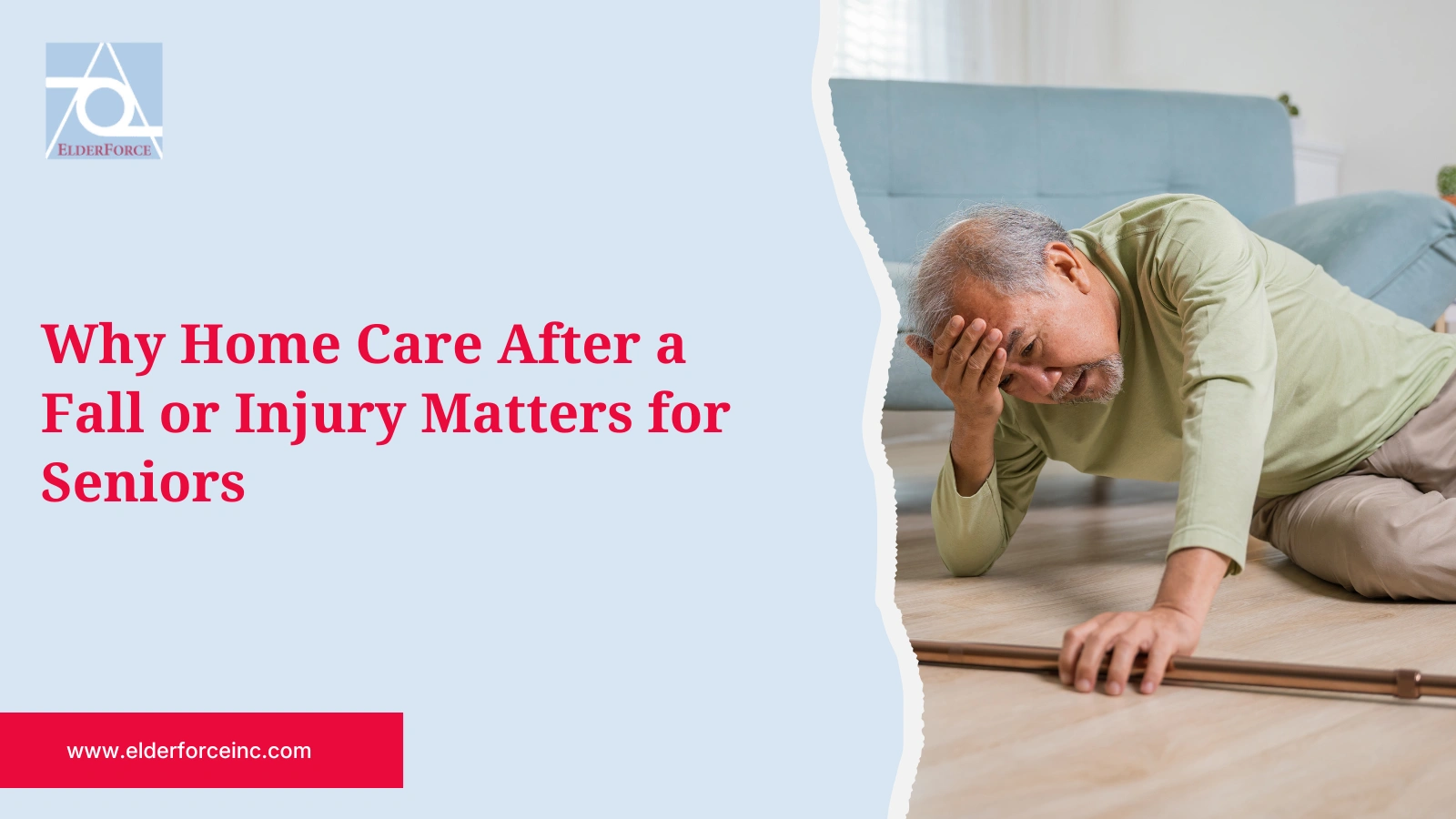
| Quick answer After a fall or injury, seniors face real risks at home: repeat falls, missed medications, and slow recovery without the right support. Home care after a fall brings trained caregivers to your loved one’s side, helping with daily tasks, safety, and healing. Starting care early can prevent hospital readmission and give families peace of mind. |
A fall can change everything in seconds. One moment your parent or spouse is moving through a familiar room. The next, they are on the floor, shaken, hurt, and uncertain about what comes next. We understand how frightening that call from the hospital can be, and how quickly families are asked to make decisions they never expected to face.
Home care after a fall is not a luxury. It is often the difference between a smooth recovery and a dangerous setback. At ElderForce Inc in East Hartford, CT, our caregivers are trained to support seniors through exactly this kind of vulnerable stretch. Whether the need lasts a few weeks or becomes ongoing, we are here to help your family find stable ground again.
The Real Risks Seniors Face at Home After a Fall
Most falls among older adults happen at home, and the period right after a fall is the most dangerous time for another one. Muscle weakness, pain, fear of moving, and changed routines all raise the risk. A senior who once moved confidently through the kitchen may now hesitate, grip walls, or skip meals rather than risk walking across the house.
Injuries also slow healing in ways that are not always visible. Pain management, wound care, swelling, and limited mobility can make basic tasks like bathing, dressing, or getting to the bathroom feel impossible. Without support, seniors may attempt these tasks alone and fall again. Home care after a fall creates a buffer between independence and danger.
- Fear of falling again often causes seniors to move less, which weakens muscles further
- Missed medications after an injury can cause secondary health complications
- Poor nutrition or dehydration can develop quickly when cooking becomes too difficult
- Isolation after a fall affects mood and slows physical recovery
- Family caregivers without training may unintentionally assist in unsafe ways
What Home Care After a Fall Actually Includes
Home care is not one thing. It is a set of services matched to what your loved one actually needs right now. After a fall, that usually means help with bathing, dressing, grooming, mobility assistance, and medication reminders. It may also mean someone simply being present so your family member is not alone for long stretches of the day.
At ElderForce Inc, our personal care services cover the hands-on support seniors need during recovery. We also offer companion care for seniors who need social connection and gentle supervision rather than direct physical assistance. Both types of care can be combined and adjusted as recovery progresses.
- Bathing, dressing, and grooming assistance to reduce strain on healing injuries
- Mobility support and safe transfer techniques to and from chairs, beds, and bathrooms
- Medication reminders to keep recovery on track
- Light homemaking tasks so the environment stays safe and clean
- Friendly companionship to reduce anxiety and encourage movement
How Home Care Supports the Family, Not Just the Senior
When a parent is injured, adult children often step in immediately. They take time off work, rearrange schedules, and try to be everywhere at once. This is driven by love, but it is not sustainable. Caregiver burnout is real, and it can affect both the family member doing the caregiving and the senior receiving it.
Our respite care services give family caregivers a planned, reliable break. You can step away knowing that a trained professional is with your loved one. This is not abandonment. It is smart care planning. Families who use respite care tend to provide better care overall because they are not running on empty. Call us at (860) 568-8881 to talk through what a realistic schedule might look like for your family.
Getting from the Hospital to Home Safely
Hospital discharge after a fall can feel abrupt. One day your loved one is being monitored by nurses. The next, they are home with a set of instructions and a follow-up appointment two weeks away. That gap is where complications happen. Having a caregiver in place before discharge removes much of that risk.
ElderForce Inc also provides senior transportation services so your loved one can get to follow-up appointments and other care without depending on a family member to drive every time. Consistent attendance at follow-up care is one of the most important factors in a full recovery, and we help make that possible.
When to Start Home Care After a Fall or Injury
The best time to start home care after a fall is before your loved one leaves the hospital. A care coordinator can often be involved during the discharge planning process, so services are in place on day one at home. If your loved one has already returned home and is struggling, starting now is still the right move. Recovery does not have a hard deadline.
If you are unsure what level of care makes sense, a conversation with our team can help. We serve East Hartford, CT and the surrounding communities including Manchester, Hartford, and West Hartford. There is no pressure and no obligation. We just want to make sure your family has the information needed to make a confident choice. This post is general information; please confirm any coverage or medical care questions with your insurance plan or physician.
- Contact a home care agency before hospital discharge to coordinate a smooth transition
- Ask the discharge nurse or social worker about home care referrals
- Start with a few hours per day and adjust based on need and recovery pace
- Review the care schedule regularly and update it as recovery progresses
- Keep a simple written log of concerns to share with the care team
Frequently Asked Questions
How soon after a fall can home care begin?
Care can often begin within 24 to 48 hours of your first call, and in some cases even sooner. Reaching out before hospital discharge gives the most time to prepare.
Does insurance or Medicaid cover home care after a fall?
Coverage depends on your specific plan and the type of care needed. This is general information, not advice; confirm the details with your insurance provider or a benefits counselor before making decisions.
What if my loved one only needs help for a few weeks?
Short-term care arrangements are common after an injury. We can set up a temporary schedule and adjust or end services when recovery allows.
Can a caregiver help with transportation to follow-up appointments?
Yes. ElderForce Inc provides senior transportation services so clients can attend follow-up appointments reliably and safely without burdening family members.
How do I know if my parent needs personal care or just companionship?
Personal care covers hands-on help with bathing, dressing, and mobility, while companion care focuses on social support and light assistance. Many clients benefit from a combination of both, and we can help you decide what fits best.