
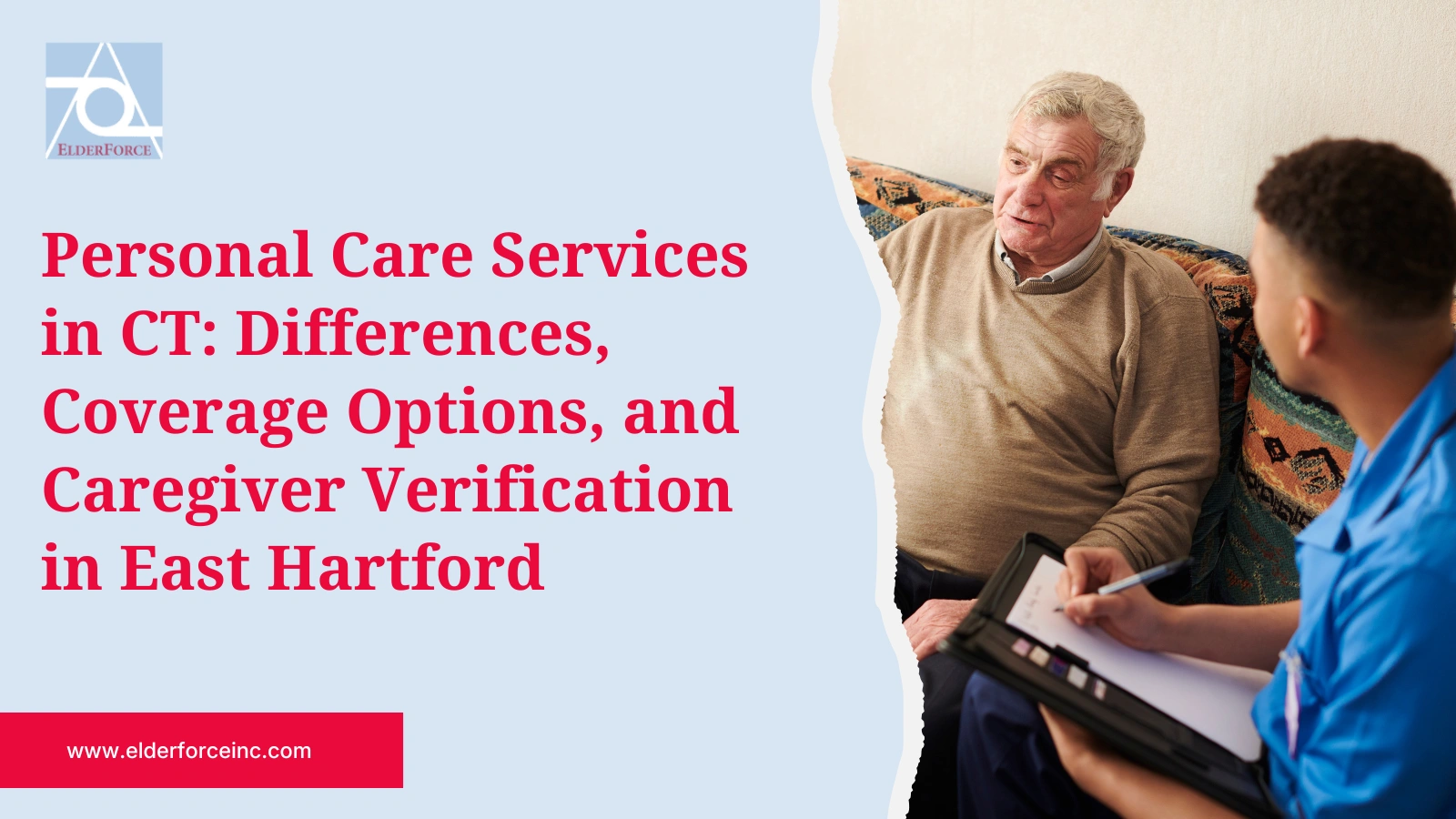
Choosing personal care in Connecticut isn’t just about finding help; it’s about understanding what level of care is actually required, how services differ, and what rules protect your family. This guide outlines personal care services in CT, covering care types, coverage options, and caregiver verification, so families in East Hartford and Hartford County can make informed, confident decisions.
What Personal Care Services Include in Connecticut
Personal care services focus on hands-on assistance that directly supports physical safety and daily stability at home. Understanding what these services include helps families recognize when personal care is necessary and how it differs from other support options discussed later.
Personal care services commonly involve:
- Bathing and grooming assistance: Physical support with hygiene tasks that require balance, coordination, and close aid to prevent falls.
- Dressing and toileting support: Help with clothing changes and restroom use when flexibility or mobility is limited.
- Mobility and transfer assistance: Support with standing, walking, and safely moving between beds, chairs, or bathrooms.
- Eating and hydration assistance: Hands-on help when coordination or strength affects safe eating.
In East Hartford, CT, these services are provided by licensed agencies such as Elder Force Inc., in accordance with Connecticut employment and oversight standards.
Why Families Rely on Personal Care Services
Once the scope of personal care is clear, families often recognize why these services become essential. Personal care supports daily routines while reducing safety risks, making it a practical solution before more restrictive care settings are needed.
Families rely on personal care to:
- Lower daily safety risks: Assistance during hygiene and movement reduces falls and injuries.
- Remain at home longer: Care is delivered in familiar surroundings rather than facility-based environments.
- Maintain predictable routines: Scheduled support stabilizes mornings, evenings, and personal care tasks.
Across Hartford County, personal care often becomes the next step when independence alone is no longer safe.
Common Challenges When Choosing Personal Care
Recognizing the need for care often raises questions that can delay decisions or create confusion. These challenges are addressed in later sections, which clarify service types, scheduling, and verification.
Common challenges include:
- Service confusion: Personal care is often mistaken for homemaking or companion care.
- Coverage uncertainty: Insurance and Medicaid eligibility rules vary and require confirmation.
- Care structure decisions: Choosing hourly or live-in care depends on the level of supervision required.
- Credential concerns: Families may not know what training or documentation to request.
Understanding these challenges early helps families navigate the rest of the decision-making process with greater confidence.
How Personal Care Services Are Set Up and Managed
Once families move past initial questions, understanding how services are organized provides clarity and sets expectations. This process connects assessment, planning, and ongoing oversight into a single care structure.
Personal care services are typically managed through:
- Initial care assessment: Daily living needs, mobility limitations, and safety concerns are evaluated.
- Personalized care plan creation: Tasks, schedules, and priorities are documented clearly.
- Caregiver placement: A caregiver is matched based on care needs and availability.
- Ongoing supervision: Services are monitored and adjusted as needs change.
This structure ensures care remains aligned with evolving needs over time.
Personal Care Services vs Homemaking Services
Understanding service management naturally leads to comparing care types. This distinction helps families avoid selecting services that do not align with their daily needs.
Key differences include:
- Personal care services: Hands-on physical assistance with daily living activities such as bathing, toileting, and transfers.
- Homemaking services: Household task support only, including cleaning, laundry, and meal preparation.
Helping someone bathe falls under personal care, while cleaning the bathroom is homemaking. Elder Force Inc. provides both personal care services and homemaking services in East Hartford.
Live-In Personal Care vs Hourly Care Options
After identifying the correct service type, families must decide how frequently care is needed throughout the day. This choice directly affects cost, supervision, and daily structure.
Care options include:
- Hourly personal care: Scheduled for specific times, offering flexibility for morning or evening routines.
- Live-in personal care: A caregiver remains in the home for frequent assistance and requires sleeping accommodations.
The right option depends on daily routines, supervision needs, and safety considerations.
Insurance and Payment Options for Personal Care in CT
Once care frequency is determined, families naturally turn to questions about affordability and coverage. Payment options often shape how services are scheduled and delivered.
Standard payment options include:
- Private pay: Direct payment based on hours or care level.
- Long-term care insurance: Coverage depends on policy terms and benefit limits.
- Connecticut Medicaid waivers: Eligibility-based programs that may cover personal care services.
Medicare does not cover non-medical personal care, and approval requirements should be reviewed before starting services.
Documentation and Care Management Requirements
Coverage and service quality rely heavily on accurate documentation. These records connect care delivery, compliance, and accountability.
Licensed agencies typically maintain:
- Written care plans: Clearly outline daily tasks and care schedules.
- Service agreements: Define expectations and responsibilities.
- Caregiver screening records: Document background checks and training.
- Supervision documentation: Supports continuity and quality control.
Elder Force Inc. manages these records as part of standard care operations.
Verifying Caregiver Credentials in Connecticut
Documentation naturally leads to caregiver verification, ensuring services meet state standards. This step protects families and supports safe care delivery.
Families should review:
- Agency registration: Confirms the agency’s legal operation in Connecticut.
- Background and training policies: Ensures caregivers meet screening requirements.
- Care plans and supervision processes: Shows how services are monitored.
- State compliance alignment: Follows Connecticut Department of Social Services guidelines.
Working with a licensed local agency simplifies this process.
Mistakes Families Should Avoid When Selecting Personal Care
Understanding credentials helps families avoid common mistakes that affect care quality and cost. These missteps often stem from skipping earlier decision steps.
Mistakes to avoid include:
- Assuming homemaking includes personal care, these services address different needs.
- Choosing live-in care unnecessarily can increase costs without added benefit.
- Overlooking coverage limits may lead to unexpected expenses.
- Skipping reassessments, care needs often change over time.
Avoiding these issues supports better long-term outcomes.
Real-Life Use of Personal Care in East Hartford
Seeing how services apply in everyday situations helps connect all previous sections into real-world use.
Common examples include:
- Hourly personal care: Used for bathing, dressing, and safe transfers.
- Daily ongoing assistance: Supports individuals with mobility or balance challenges.
Care plans vary, but the goal remains consistent: daily support at home.
Personal Care Services Available in East Hartford, Hartford County
Local availability connects planning with practical access to care. Understanding service presence helps families move from research to action.
Personal care services in East Hartford, Hartford County, CT follow state regulations and staffing standards. Availability may vary based on caregiver supply and scheduling needs.
Elder Force Inc. provides:
- Personal Care: Hands-on assistance with daily living tasks such as bathing, dressing, mobility support, and personal hygiene to help individuals manage routines safely at home.
- Companion Care: Non-medical support focused on supervision, conversation, and daily engagement, helping individuals stay socially connected while maintaining routine activities.
- Respite Care: Short-term care services designed to support individuals while giving family caregivers time to rest, attend appointments, or manage other responsibilities.
Coverage areas are listed on the service areas page. Families can also view organizational updates on LinkedIn.
Frequently Asked Questions About Personal Care Services in CT
Families often ask similar questions when planning care. The answers below clarify common concerns discussed throughout the blog.
What are considered personal care services in Connecticut?
Personal care services in CT include hands-on assistance with daily living activities such as bathing, dressing, toileting, mobility, and eating. These services are non-medical and delivered in the home through licensed agencies. They support safety when tasks become physically challenging.
Does Medicaid or insurance cover personal care services in CT?
Some Connecticut Medicaid waiver programs may cover personal care for eligible individuals. Specific long-term care insurance policies may also provide coverage, depending on the policy terms. Medicare does not cover non-medical personal care services.
What is the difference between personal care, homemaking, and companion care?
Personal care involves physical assistance with daily living tasks. Homemaking focuses on household chores without hands-on care. Companion care provides supervision and social interaction but does not include physical personal assistance.
How can families verify caregiver credentials in Connecticut?
Families should confirm agency registration, review background screening policies, and request documentation related to training and supervision. Reviewing care plans and service agreements further supports accountability.
Get Personalized Personal Care Support From Elder Force Inc.
Every step in this guide leads toward informed, local decision-making. Families ready to move forward can connect directly with a provider serving their community.
If you’re seeking personal care services in East Hartford or Hartford County, Elder Force Inc. is available to discuss care options, scheduling, and availability with clear guidance.
📍 21 High St, First Floor, East Hartford, CT 06118
📞 Call Today: (860) 568-8881